
I'm a moderate republican. I like the 2nd amendment, the death penalty, and Ayn Rand. I'm a capitalist at heart and I believe the best societies have more financial freedom. I'm also a woman, and some of my social views are pretty liberal. Because of this I spent a long time debating who I should vote for, making lists of the candidates' platforms and voting records, and trying to align those with my own views. Even though there were only two choices, I felt like who I picked would tell me a lot about myself and which views I found more important. For a long time, I couldn't make the decision. The answer easily came to me in early September, and my decision never wavered after that.
I chose to vote for Barack Obama because of the introduction of Sarah Palin as the Republican Vice Presidential pick. When I initially heard rumors of McCain's choice, I thought two things. 1) He is using her gender to get the female vote, and to compete with the fact that the democrats had a historical nominee. 2) It could be nice to have a female as second in command for a change. The second thought disappeared as soon as I discovered Sarah Palin in no way represented the values that I do, as a female, and Barack Obama absolutely did.
When I heard Palin say things like, "I'd oppose abortion even if my own daughter was raped," my feelings about guns and the free market were no longer important. When I found out about her desire to push an abstinence-only sex education on the nation's youth, it was like I had not even read The Fountainhead. Sarah Palin opposed expanding hate crimes to include sexual orientation (I believe homosexuality is included in women's issues), and advocated making women buy their own rape kits, and just in general, seemed to oppose everything women activists have fought for for the past century.
2008 was my first presidential election, and it was certainly very interesting. What I took from it, more than anything, was that the economy will rise and fall as it normally does. I am always open to my political views changing, as they have in the past. I was not born a republican, but a woman, and I will die a woman, so I am a woman first, and my rights need to be protected. My right to govern my own body, my right to marry who I want, my right to not have to take out a loan to find out who raped me, my right to the knowledge about safe sex - all of these made Obama the right choice for a female who finds these issues important. Most of all I learned that the gender of an individual doesn't make them a feminist, their actions and choices do. If Sarah Palin had become the Vice President of the United States, I believe feminism would have lost a lot of hard-earned progress, and that is why I voted for Barack Obama.
Tuesday, February 10, 2009

Sunday, February 8, 2009
Something (else) Michelle Obama and HRC have in common?
A story by Rachel Swarns in today's NYT reports that Michele Obama is raising eyebrows in Washington by weighing in on some policy issues. The headline is "'Mom in Chief' Touches on Policy, and Tongues Wag." Swarns characterizes Mrs. Obama's plan to visit all cabinet-level agencies as "a notably different approach" than Laura Bush's, who tended not to discuss legislation and policy, like most First ladies before her. Yet, Swarns reports:
Perhaps Mrs. Obama will evolve into a more HRC-esque role, which wouldn't bother me. After all, we are occasionally (often?) reminded by the media that Mrs. Obama is a Harvard-educated lawyer coming off a high-powered career as a hospital executive. We would not want her intellect and experience to go to waste, would we? And what's so controversial about her supporting her husband's policy positions -- maybe even having some independent positions of her own--and making those heard? Why shouldn't she add her influence to debates about issues of the day?
Some observers praised Mrs. Obama’s foray into the legislative debate, saying the new first lady, who is a Harvard-educated lawyer and a former hospital executive, was eminently qualified to promote the president’s policies.Swarns quotes a scholar who studies first ladies, Myra Gutin:
Others expressed surprise, saying they had expected Mrs. Obama to focus on her daughters and on the traditional issues she had emphasized in the presidential campaign, like supporting military families and working parents.
"She went to some lengths to say she was going to be first mom in chief . . . . I don’t think we ever really imagined her edging toward public policy like this. It’s not like she’s making public policy. But it’s a little less neutral than some of the other things she’s talked about focusing on.”Swarns suggests that Mrs. Obama's recent forays into policy still don't rise to the level of the role Hillary Clinton played in her husband's administration, and she may be right. But tongues certainly wagged about Mrs. Clinton's role as something other than White House hostess. (See these 1994 columns here, here and here by Anna Quindlen about HRC).
Perhaps Mrs. Obama will evolve into a more HRC-esque role, which wouldn't bother me. After all, we are occasionally (often?) reminded by the media that Mrs. Obama is a Harvard-educated lawyer coming off a high-powered career as a hospital executive. We would not want her intellect and experience to go to waste, would we? And what's so controversial about her supporting her husband's policy positions -- maybe even having some independent positions of her own--and making those heard? Why shouldn't she add her influence to debates about issues of the day?
The Israeli version of Hillary Clinton/Palin?
It looks like we have another Hillary Clinton (or Palin), except she's not in the United States: She's in Israel. After the Israel Prime Minister Ehud Olmert stated that he would resign, an election was scheduled. Tzipi Livni (pictured below) won the September 2008 election, and would have become the prime minister had she formed a coalition government with different political parties. She had 90 days, but many parties refused to join the coalition government, causing an election to be scheduled February 2009.
A quick background to the Israeli government: The way the Israeli elections works is extremely different from elections in the U.S.. First of all, there are numerous parties, not like United States’ two central parties. When an election is held for the Israeli parliament, the percentage of votes casted for a party means the percentage the party is represented in the government.
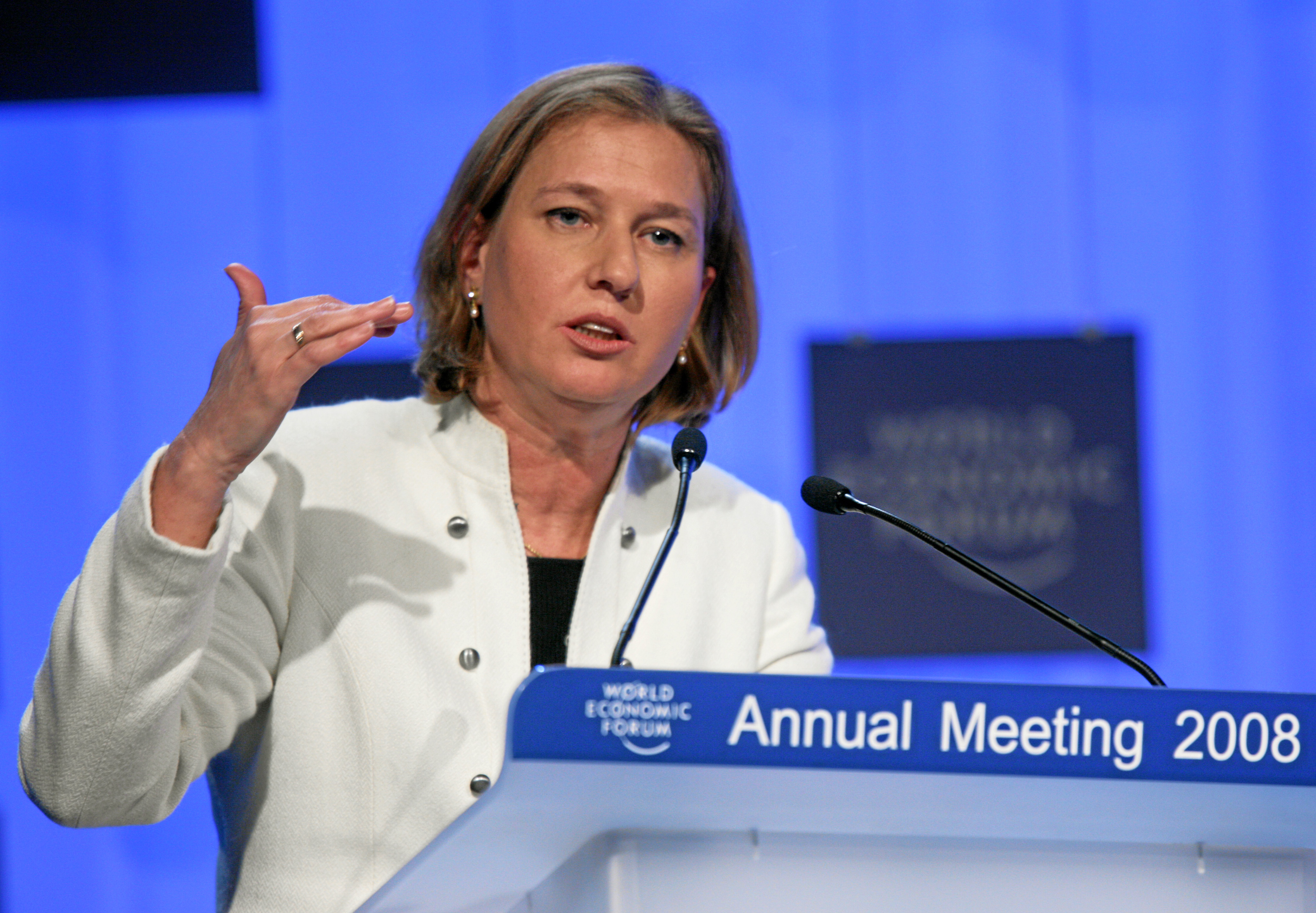
Tzipi Livni? Who is she? Many of us outside of Israel have never heard of Livni, and you can’t blame us. Livni is currently the acting prime minister of Israel, and was previously the Minister of Justice, Minister of Regional Cooperation, Minister of Agriculture and Rural Development, Minister of Immigrant Absorption, and Minister of Housing and Construction. In her very early career, she was a Mossad (Israel’s equivalent of the United States’ CIA) agent, and had a role in covert operations during the 1982 Lebanon War. She was ranked the 52nd most powerful women in the world in 2008 by Forbes, 39th most powerful women in the world in 2007, and 40th most powerful women in the world.
Just a week ago, the Israel’s 2009 legislative elections ended. It was an extremely close call for Livni, who was running to defend her position as acting prime minister of Israel. In fact, Livni won with such a close margin that many have suggested that Livini’s victory could have been due to women voters. This was the article which inspired me to write this blog post:
http://uk.reuters.com/article/worldNews/idUKTRE51852B20090209
After reading the article, I was extremely surprised at Livni’s blatant attempts to use her gender to her advantage. Livni’s party had many billboards plaguing Israel promising a “different kind of prime minister” and “urged Israelis to elect the country’s first women prime minister in three decades”. Just like Hillary, Livni avoided using the gender card until the few weeks leading up to the election. With so much experience in the government, I thought that it was very interesting of her to evoke gender by including simple statements in her speeches like “I make decisions, not coffee”. In the days leading up to the elections, Livni even went an extra step to exploit her gender by making visits solely to please the feminist crowds. Once such event was a techno dance rally for women. (see the picture) Just behind Livni, a slogan states “Gentlemen, the time has come for women”. Such usage of gender was also seen on Livni’s opponents. The Likud party, a major opponent of Livni, even ran a sexist and anti-feminist campaign stating that the role as prime minister is too big for Livni.
Gender seems to play a larger role in today’s politics and not just in America. This may be because our society today is unable to change our traditional values, a belief that women should not have leading roles. However, we now see females in governmental roles even in predominant Muslim countries, where females were treated like second-class citizens. However, this does not mean that politicians and leaders should be able to use gender to their advantage. Do you think that Livni’s “gender card” is justified? Was her opponent’s anti-feminist slogans fair?
A quick background to the Israeli government: The way the Israeli elections works is extremely different from elections in the U.S.. First of all, there are numerous parties, not like United States’ two central parties. When an election is held for the Israeli parliament, the percentage of votes casted for a party means the percentage the party is represented in the government.
Tzipi Livni? Who is she? Many of us outside of Israel have never heard of Livni, and you can’t blame us. Livni is currently the acting prime minister of Israel, and was previously the Minister of Justice, Minister of Regional Cooperation, Minister of Agriculture and Rural Development, Minister of Immigrant Absorption, and Minister of Housing and Construction. In her very early career, she was a Mossad (Israel’s equivalent of the United States’ CIA) agent, and had a role in covert operations during the 1982 Lebanon War. She was ranked the 52nd most powerful women in the world in 2008 by Forbes, 39th most powerful women in the world in 2007, and 40th most powerful women in the world.
Just a week ago, the Israel’s 2009 legislative elections ended. It was an extremely close call for Livni, who was running to defend her position as acting prime minister of Israel. In fact, Livni won with such a close margin that many have suggested that Livini’s victory could have been due to women voters. This was the article which inspired me to write this blog post:
http://uk.reuters.com/article/worldNews/idUKTRE51852B20090209
After reading the article, I was extremely surprised at Livni’s blatant attempts to use her gender to her advantage. Livni’s party had many billboards plaguing Israel promising a “different kind of prime minister” and “urged Israelis to elect the country’s first women prime minister in three decades”. Just like Hillary, Livni avoided using the gender card until the few weeks leading up to the election. With so much experience in the government, I thought that it was very interesting of her to evoke gender by including simple statements in her speeches like “I make decisions, not
 coffee”. In the days leading up to the elections, Livni even went an extra step to exploit her gender by making visits solely to please the feminist crowds. Once such event was a techno dance rally for women. (see the picture) Just behind Livni, a slogan states “Gentlemen, the time has come for women”. Such usage of gender was also seen on Livni’s opponents. The Likud party, a major opponent of Livni, even ran a sexist and anti-feminist campaign stating that the role as prime minister is too big for Livni.
Gender seems to play a larger role in today’s politics and not just in America. This may be because our society today is unable to change our traditional values, a belief that women should not have leading roles. However, we now see females in governmental roles even in predominant Muslim countries, where females were treated like second-class citizens. However, this does not mean that politicians and leaders should be able to use gender to their advantage. Do you think that Livni’s “gender card” is justified? Was her opponent’s anti-feminist slogans fair?
Wednesday, February 4, 2009
Gender in 2008 Survey
Here is the link to the survey created for this class.
Send it to people you know so we can get as many responses as possible!
Send it to people you know so we can get as many responses as possible!
Wednesday, January 28, 2009
Sarah Palin Opens a PAC
The former Republican vice-presidential nominee Sarah Palin launched her first political action committee (PAC), SarahPAC, yesterday.
Here is an exerpt from the Politico article.
Alaska Gov. Sarah Palin (R) has launched a political action committee designed to raise funds for local and national candidates.
It is interesting to note that with a majority of the news articles I have read about Sarah Palin and John McCain, journalists refer to the lack of a strong and "negative" relationship between the two former partners. In this article, they point out that Sarah Palin only briefly mentioned her failed bid for the vice-presidency in 2008. Why do you think the media is specifically targeting Palin and McCain's relationship?
Monday, January 26, 2009
A comparative perspective on mothers in politics
Eleanor Beardsley's report on NPR about French Justice Minister Rachida Dati returning to work five days after giving birth makes a lot of good points about whether this is a good thing or bad thing for women.
Here's a quote from Florence Montreynaud, a writer and feminist:
Here's a quote from Florence Montreynaud, a writer and feminist:
I think it's terrible for all the women in France . . . . Because this example separates women into two categories: a few superwomen with a wonderful job, and millions [of] other women that are totally normal to feel a little tired after birth. These women are — what to say — sissy? Or weakling?The editor of the French magazine Closer, however, praised Dati, 43, calling her a symbol of the modern woman. He said:
I think these images will stay on the memoire collective, on the memory of all the French women, because it's a very strong image . . . . I think this image gives hope to women in their 40s, women who want children. Because it shows that you can be pregnant and keep very important responsibilities in your job.
Dati happens to be unmarried, and she has not disclosed the identity of the child's father. She is also iconic in France because she is a rare immigrant success story, the daughter of Algerian-Moroccan parents.
One angle that Beardsley doesn't amplify but that speaks for itself in this report is how we judge women--especially mothers--for their choices. She reports poll results indicating that 56% of those surveyed disapprove of Dati's quick return to work.
French law provides a 16-week paid maternity leave and strong job protection for mothers.
How would we respond to her if she were the U.S. Attorney General? How do we feel about Kirsten Gillibrand working until the day before she gave birth eight months ago?
Obama's Plan to Revolutionize Politics

Obama, a former community organizer, has made it clear from the beginning that turning his campaign's unprecedented usage of immensely popular new media into a functional government tool is one of his most important ambitions for the administration. By involving the public with its government through social networking websites and directly reaching Americans with YouTube videos, Obama hopes to break through the middle-man media and connect with citizens more directly and efficiently.
However, legal barriers apply; the White House is unable to use the 13-million-person email list compiled during the Obama campaign due to the fact that it was created for political purposes, so instead the huge undertaking of updating American politics to a nation of YouTube and Facebook users has been delegated to the Democratic Party. The group in charge of assembling Obama's upcoming machine of video messages, blogs detailing administration policy, and other political resources is still fundraising and has not fully developed a website but has ambitious plans for implementation.
While it's certainly important to keep up with the mainstream technology and news-gathering habits of America, it is also necessary to consider those who are being left out of Obama's project. The internet is expansive, but it's also not readily available to all American citizens, particularly those who don't own computers. Older generations who have computers but don't necessarily go online on a regular basis are also not being included in this internet-based political system.
Moreover, communicating information directly from the White House to the public eliminates the media as a moderator. If citizens rely unquestioningly on this discourse alone, they miss out on the press's criticisms and may interpret the administration's characterizations of events and policies as the absolute truth.
So far, Obama's moves to convert the country to a pop media-based age of information have been incredibly effective (after all, he got elected). I was interested to see if this issue might be somewhat gendered, so I found another article printed by the New York Times almost a year ago regarding Hillary Clinton's contrasting political strategies. Entitled "The Audacity of Hopelessness," this article chastises her tendency to "[keep] to the Bush playbook," playing it old school throughout her campaign and failing to engage the public the way Obama did. The article reads:
Clinton fans don't see their standard-bearer's troubles this way. In their view, their highly substantive candidate was unfairly undone by a lightweight showboat who got a free ride from an often misogynist press and from naive young people who lap up messianic language as if it were Jim Jones's Kool Aid.
Once again, the media blames Hillary Clinton for playing the gender card. While Clinton certainly didn't employ innovative campaign tactics like her rival Obama, it seems unfair to blame her failure on whining about sexism. In this way, it seems that candidates' strategies for promoting themselves is at least somewhat tied up in gender.
President Obama's plan to change popular politics and engage citizens to influence policy and increase their civic participation is certainly ambitious, but judging from the way he revolutionized the 2008 election, the administration's goals seems entirely possible. One just has to wonder if such formidable goals could have been accomplished by a woman with her own political strategy.
Subscribe to:
Posts (Atom)